Why So Many Dentists Take Implant CE—And Still Refer the Next Implant Out
You took the course. You learned the anatomy. You reviewed case selection. You watched implant placement. You practiced the sequence. You earned the CE. You came home motivated.
Then a patient showed up with what looks like a straightforward implant case.
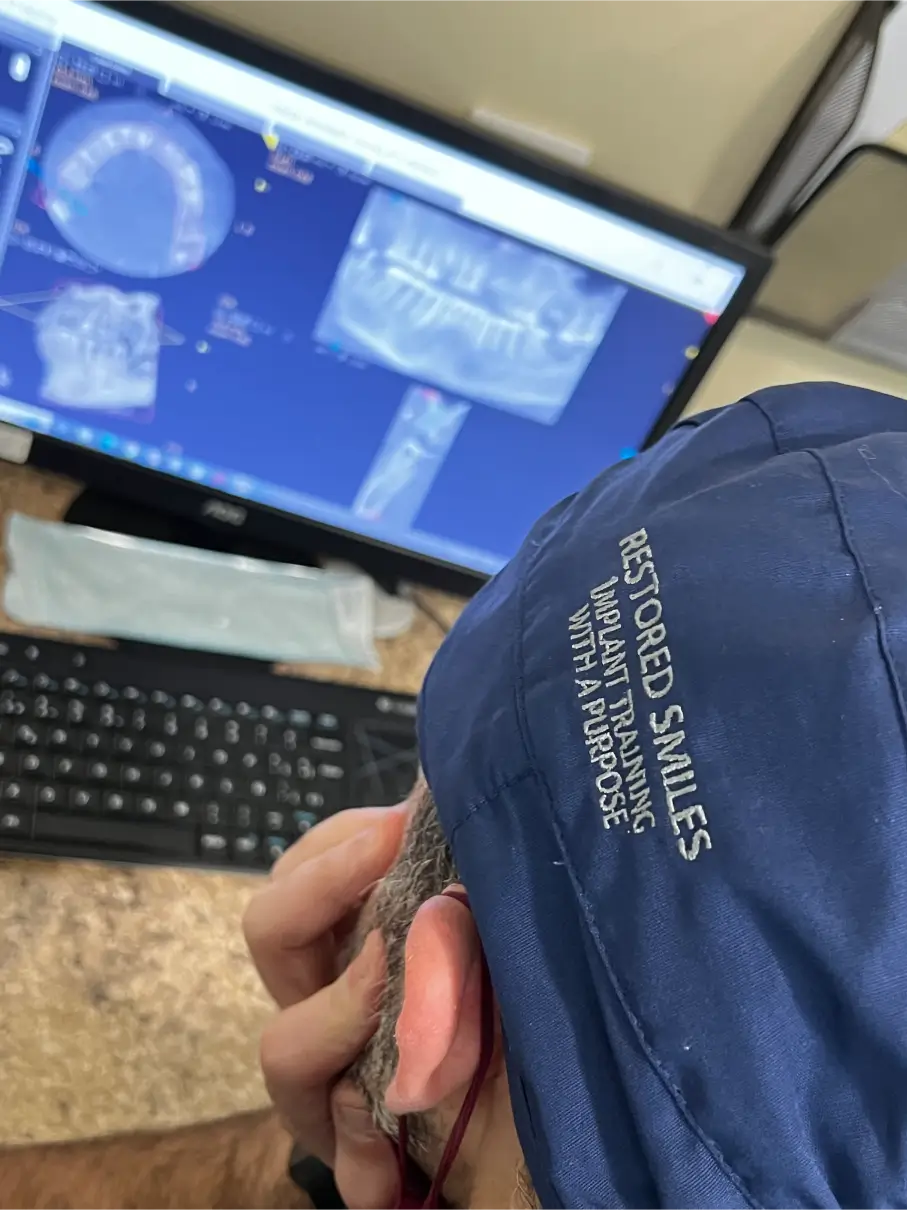
You pulled up the CBCT. Looked at the bone. Looked at the anatomy.
And thought:
“I could probably do this.”
Then another thought showed up:
“Maybe I should refer it.”
So you did.
If that sounds familiar, there may not be anything wrong with your education.
And there may not be anything wrong with your clinical ability.
Ready to Start Your Journey?
Please fill out the form to sign up for our Continual Education Dental Implant Course and get all the details you need to begin your training today. Don’t miss this opportunity to advance your career and offer your patients the best dental implant care available in the market today!
We take your privacy seriously and guarantee that your information will never be shared with third parties.
You may simply have run into one of the biggest problems in advanced dental continuing education:
Knowing how to do something and feeling ready to do it are not the same thing.
Dentistry Has a Confidence Gap
There is a predictable progression when dentists learn a new clinical procedure.
First comes:
“I don’t know how to do this.”
Then education starts.
Eventually that becomes:
“I understand how this works.”
That’s progress.
But there is another step:
“I’ve done this enough under supervision that I trust myself to begin handling appropriate cases.”
That is a very different level of confidence.
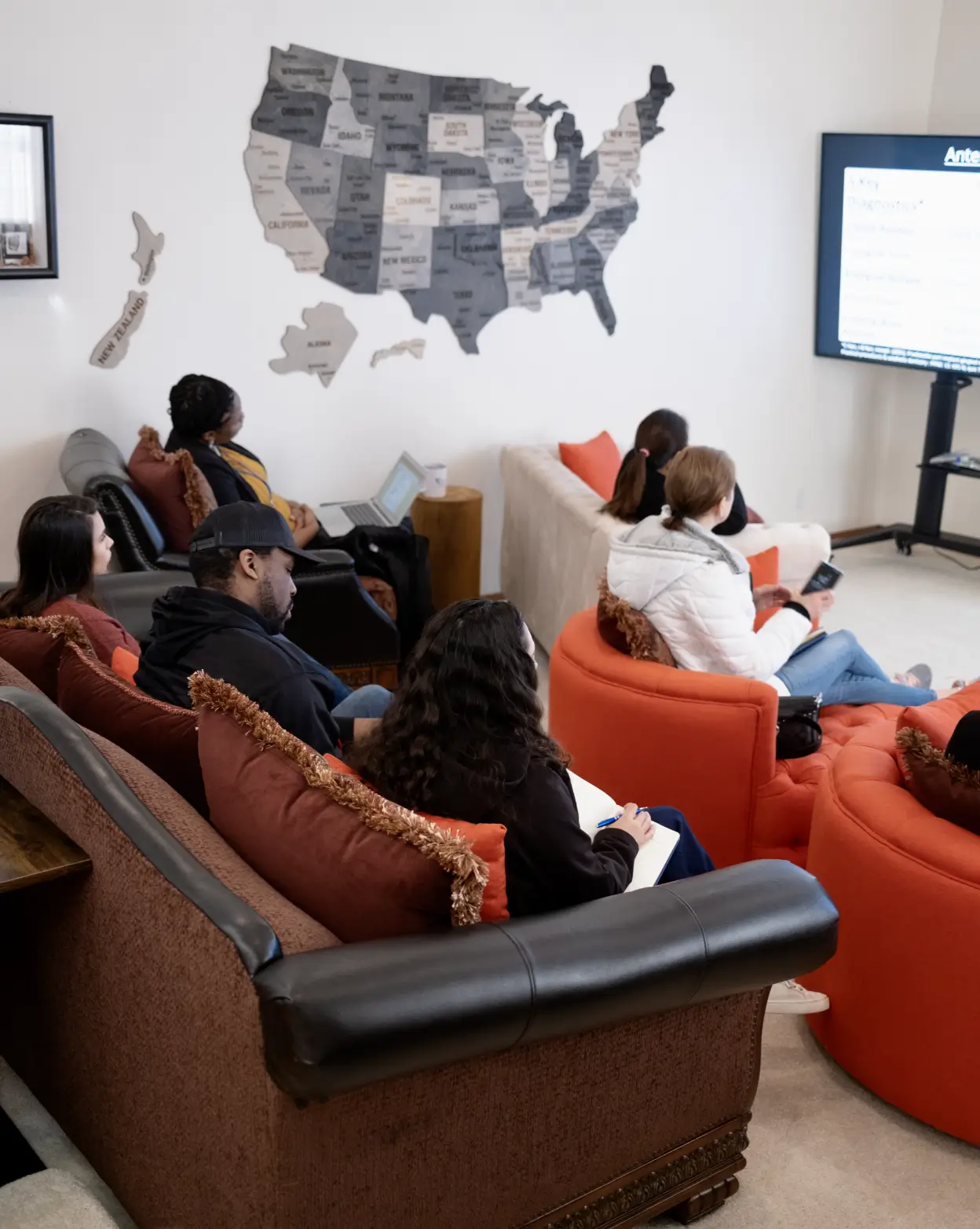
And it is difficult to get there through lecture alone.
…and still hesitate when the patient is actually numb and the handpiece is in their hand.
Why?
Because real surgery adds variables a slide deck cannot recreate. There is tissue. Blood. Bone that doesn’t feel exactly like the model. Patient anatomy that doesn’t look exactly like the textbook. Unexpected resistance. Angulation decisions. Depth decisions. Questions that arise in real time.
At some point, implant dentistry stops being something you understand intellectually.
It becomes something you have to experience clinically.
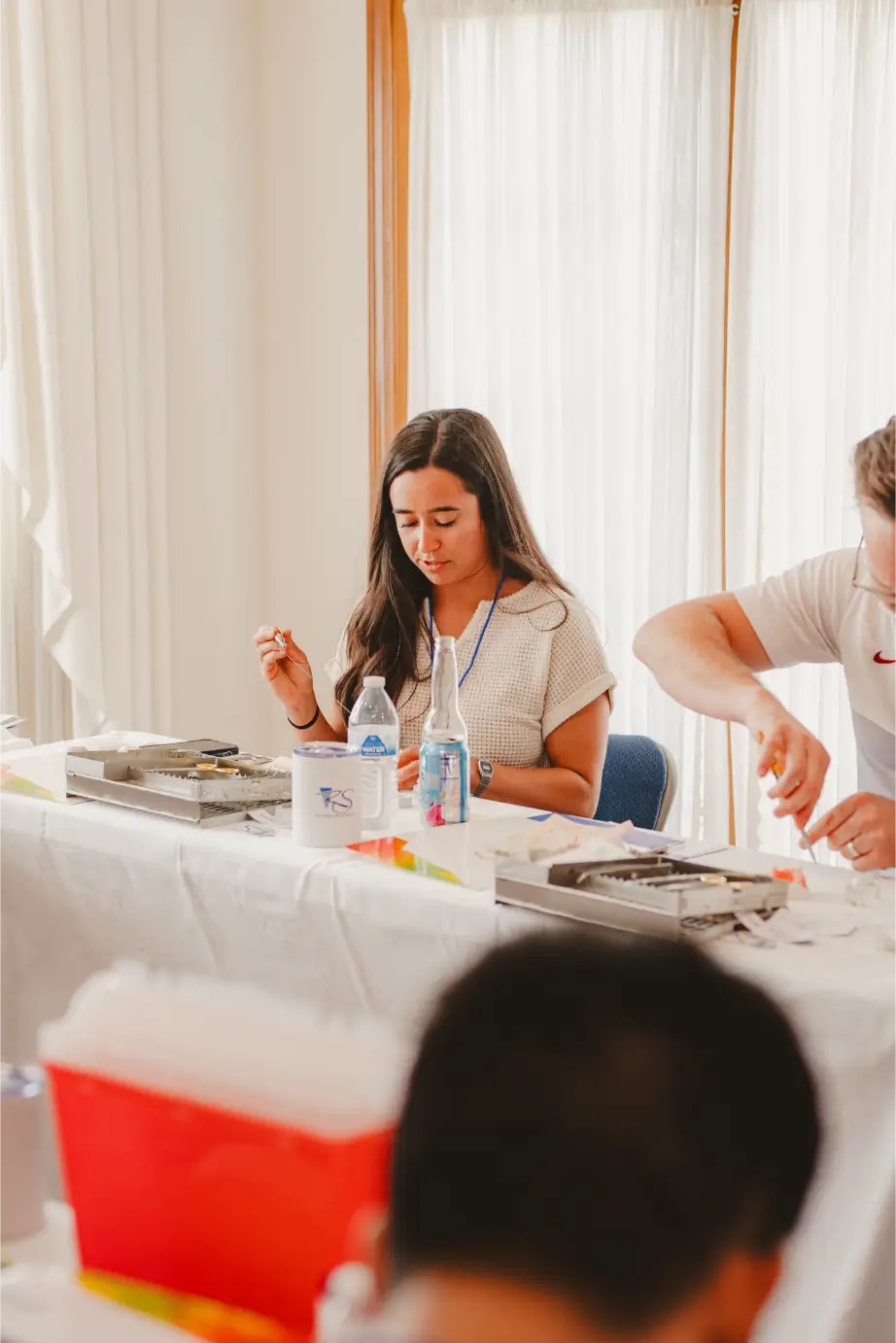
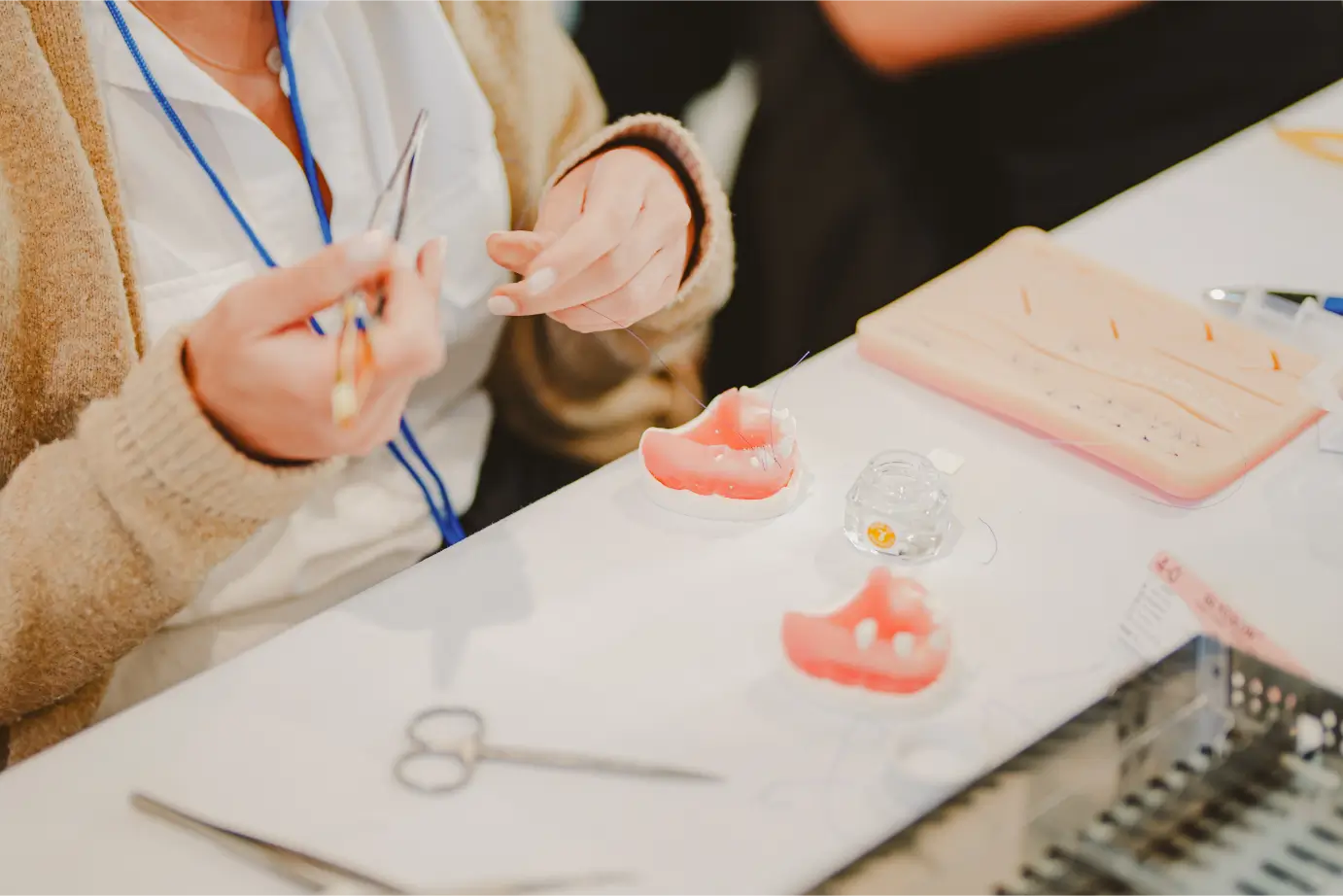
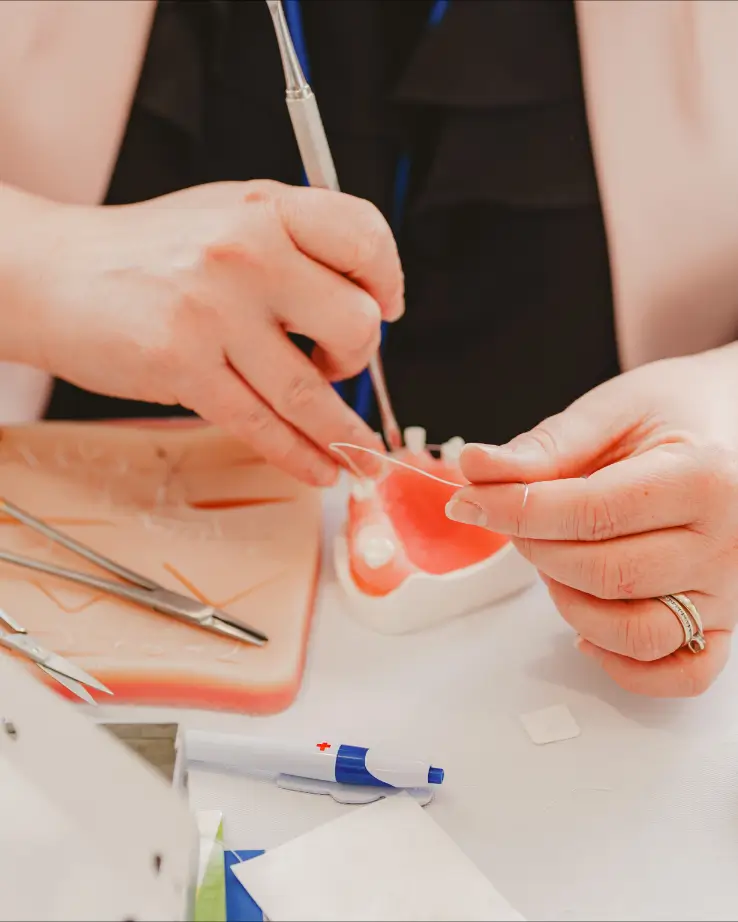
learn the drilling sequence, handle the instruments, practice positioning, understand the implant system, develop hand familiarity, and make mistakes in a controlled environment.
That is incredibly valuable. But a model isn’t a patient. A model doesn’t have soft tissue. It doesn’t have variable bone quality. It doesn’t move. It doesn’t have medical history. And it doesn’t create the same psychological pressure.
That is why a dentist can perform beautifully in a simulation and still hesitate when it is time to treat a real person.
The First Real Patient Changes Everything
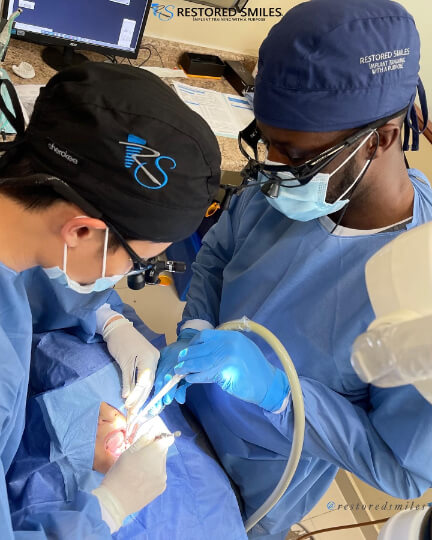
There is something fundamentally different about performing a procedure when an experienced clinician is standing nearby.
You can ask:
“Would you place this here?”
“How does this bone feel to you?”
“Would you graft this?”
“Am I too facial?”
“Would you stop here?”
“Is this a case I should even be treating?”
That feedback can be worth more than another afternoon of lecture.
Because you are receiving the answer in context.
Not theoretically.
Not weeks later.
Right there, while you’re making the decision.
This Is Why Repetition Matters
The first implant does not feel like the fifth. And the fifth does not feel like the tenth. That doesn’t mean there is a magic number at which a dentist suddenly becomes competent.
There isn’t.
But repetition gives the doctor something that information alone cannot provide:
Pattern recognition.
You begin to recognize what different bone feels like. You become more comfortable with the instruments. You begin anticipating the next step rather than consciously remembering it. You recognize when something does not feel right. And perhaps most importantly: You start understanding the boundaries of your own ability.
That last part is critical. A confident implant dentist isn’t someone who believes they should perform every case.
A confident dentist knows:
“This one is mine.”
and
“This one should be referred.”
That distinction is part of clinical judgment.
The Real Goal Isn't Confidence Without Caution
There is another mistake worth avoiding. Dentists should not leave a CE course feeling invincible.
That’s not the goal.
The goal is something closer to:
Competence with appropriate caution.
A good training pathway should increase confidence while also sharpening case selection.
The doctor should understand:
what they are prepared to treat, what requires more experience, what anatomical situations increase risk, and when specialist involvement is appropriate.
Confidence and humility should grow together.
That is a much healthier endpoint than:
“I took a weekend course, so now I place everything.”
So What Actually Builds Clinical Confidence?
In our view, there are several stages.
Stage 1 — Understand It
Learn the fundamentals.
Anatomy.
Case selection.
Treatment planning.
Surgical concepts.
Restorative considerations.
Complications.
Workflow.
Stage 2 — Practice It
Handle the instruments.
Practice the drilling sequence.
Place implants in models.
Work on suturing.
Work through grafting techniques.
Ask questions.
Make mistakes before a real patient is involved.
Stage 3 — Perform It With Supervision
Treat actual patients.
Make real clinical decisions.
Get immediate feedback.
Experience tissue, bone and anatomy that cannot be perfectly simulated.
Stage 4 — Implement Carefully
Return to your own practice.
Start with appropriate cases.
Continue treatment planning.
Ask for another opinion when needed.
Refer the cases that exceed your comfort and experience.
Gradually expand your capabilities.
That progression makes intuitive sense.
And it is exactly why staged implant education can be so valuable.
This Is the Problem Restored Smiles Was Built Around
Dr. Jed Huss designed the Restored Smiles implant continuum around a simple progression:
Learn It. Practice It. Perform It.
Rather than trying to compress everything into one experience, the program progresses dentists through three stages.
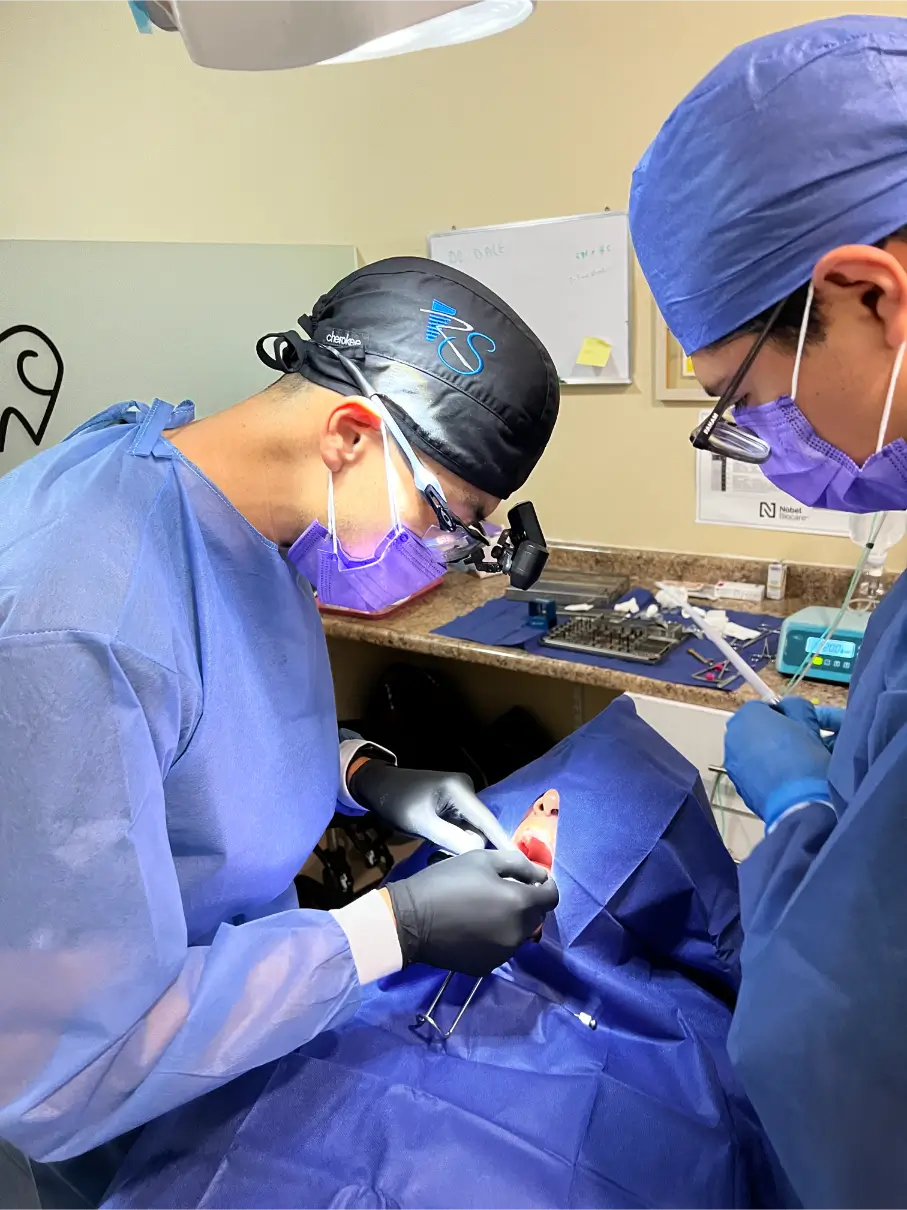
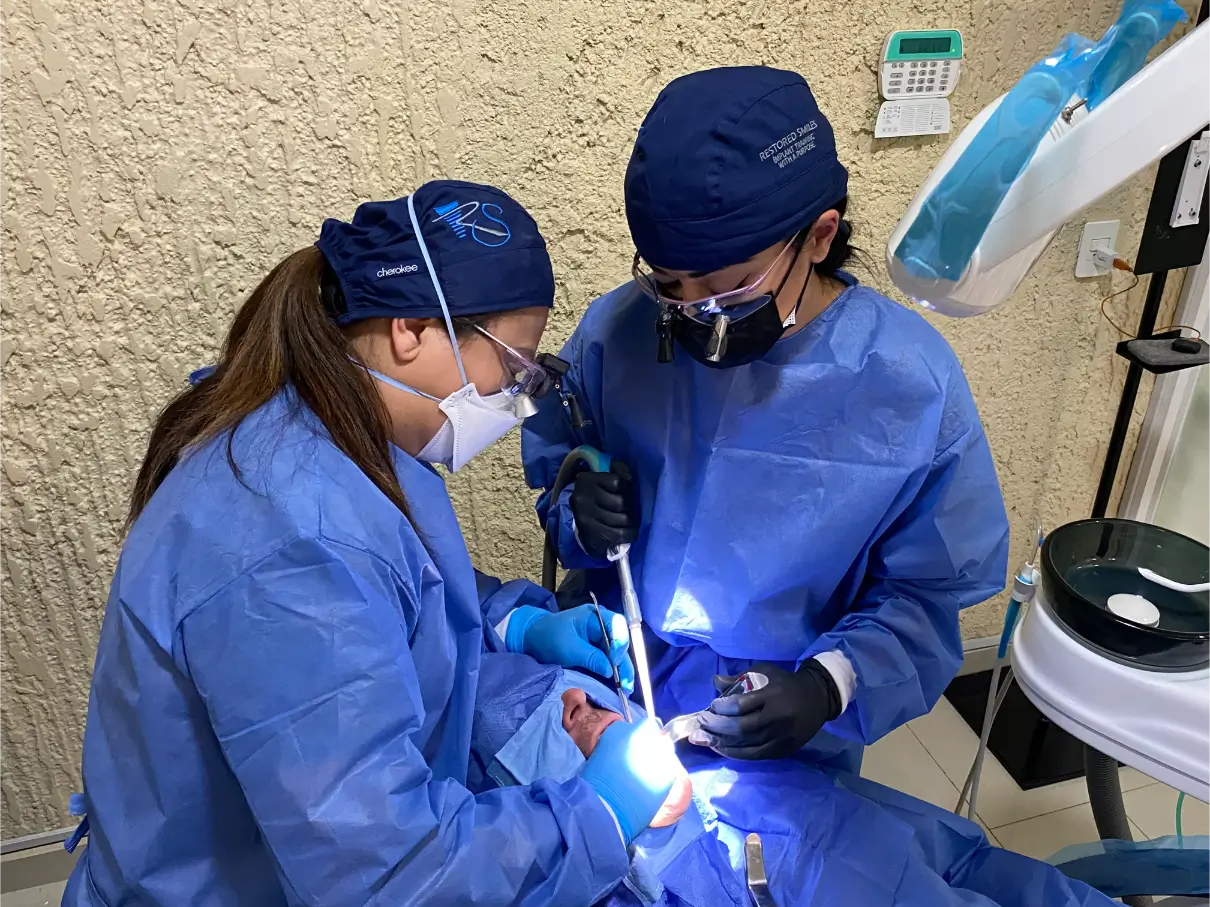
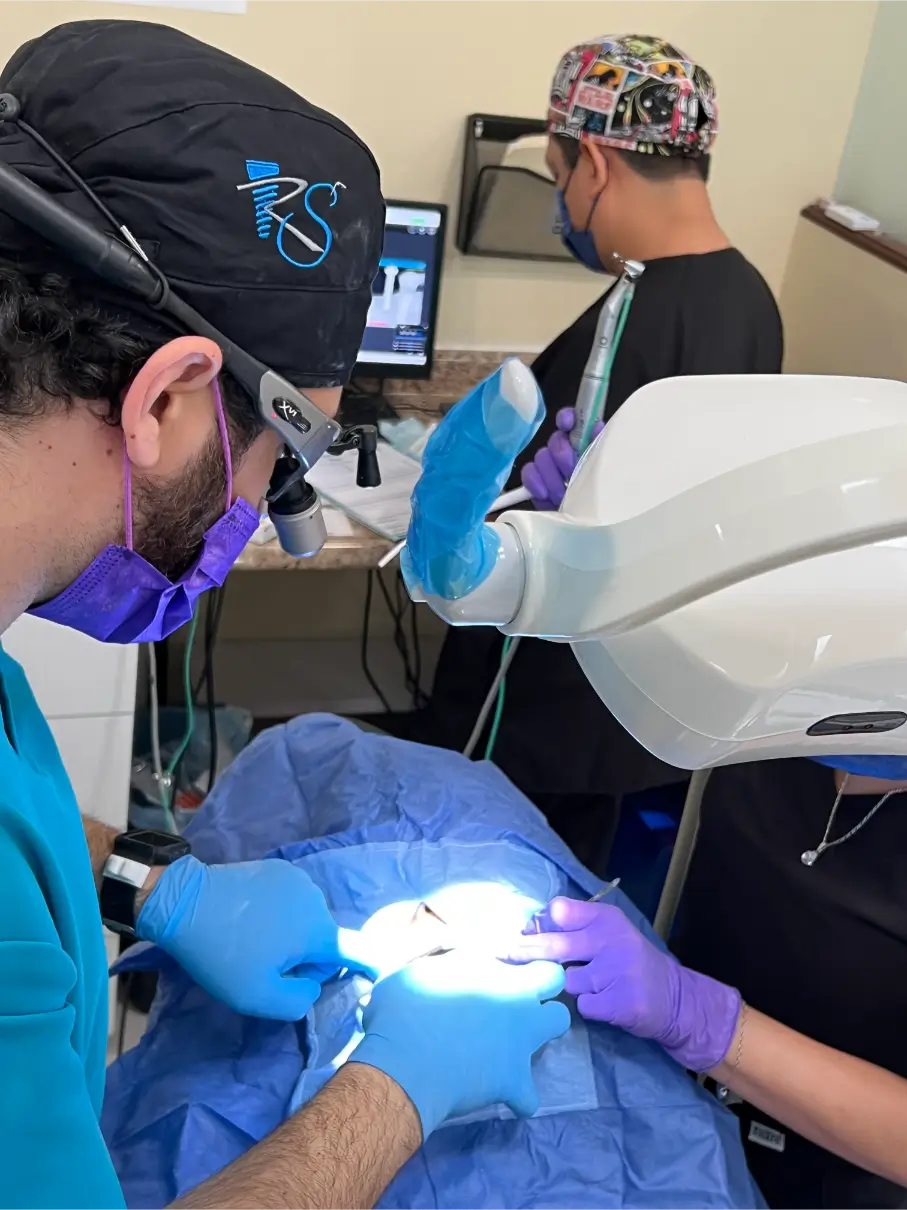
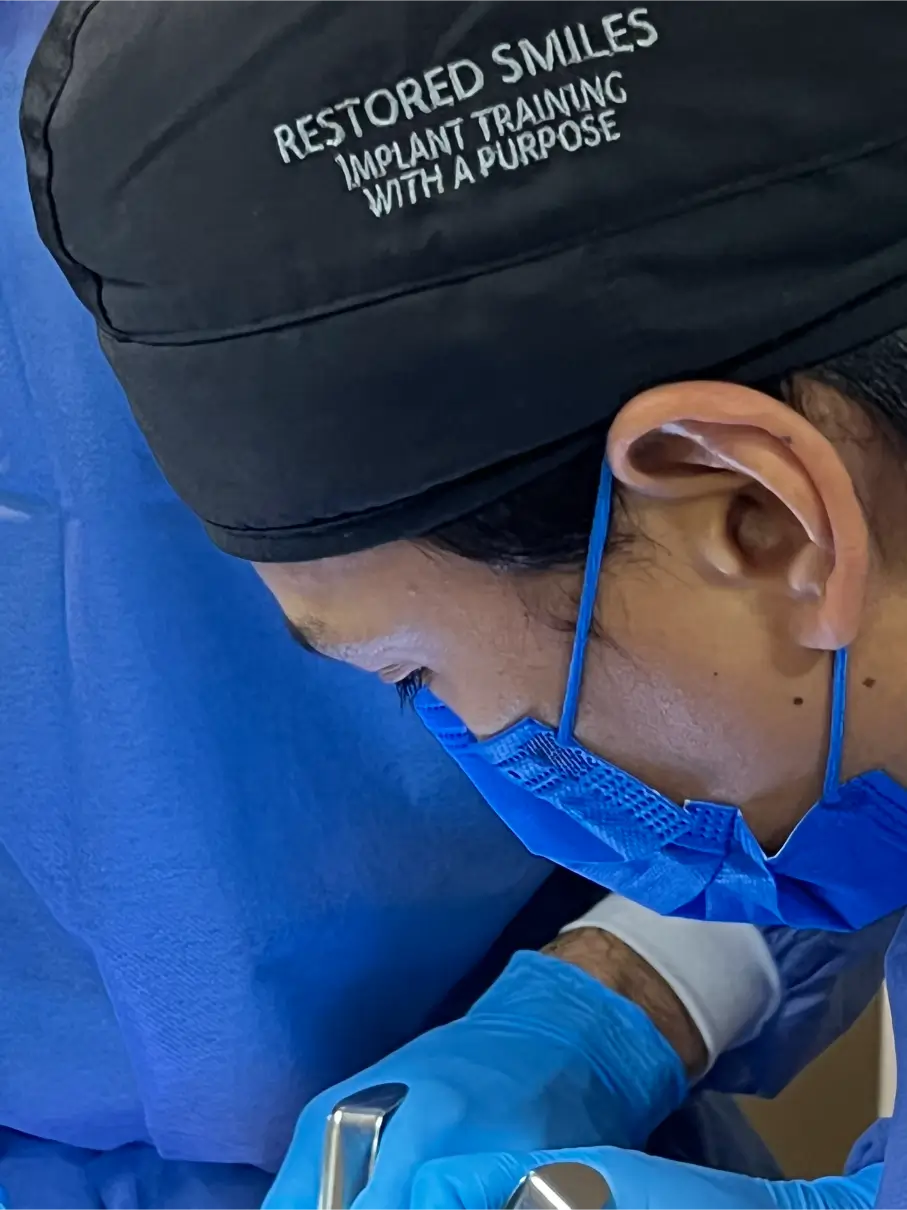
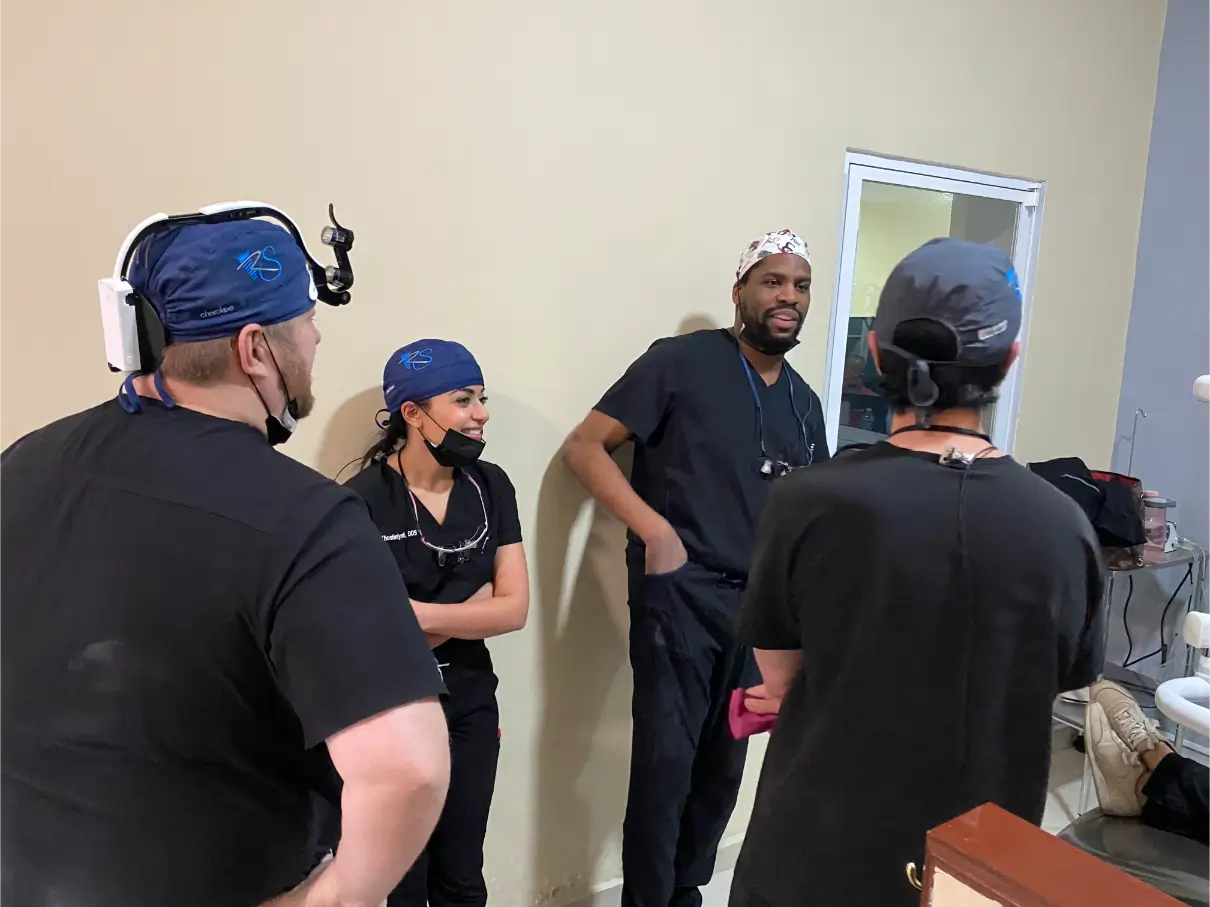
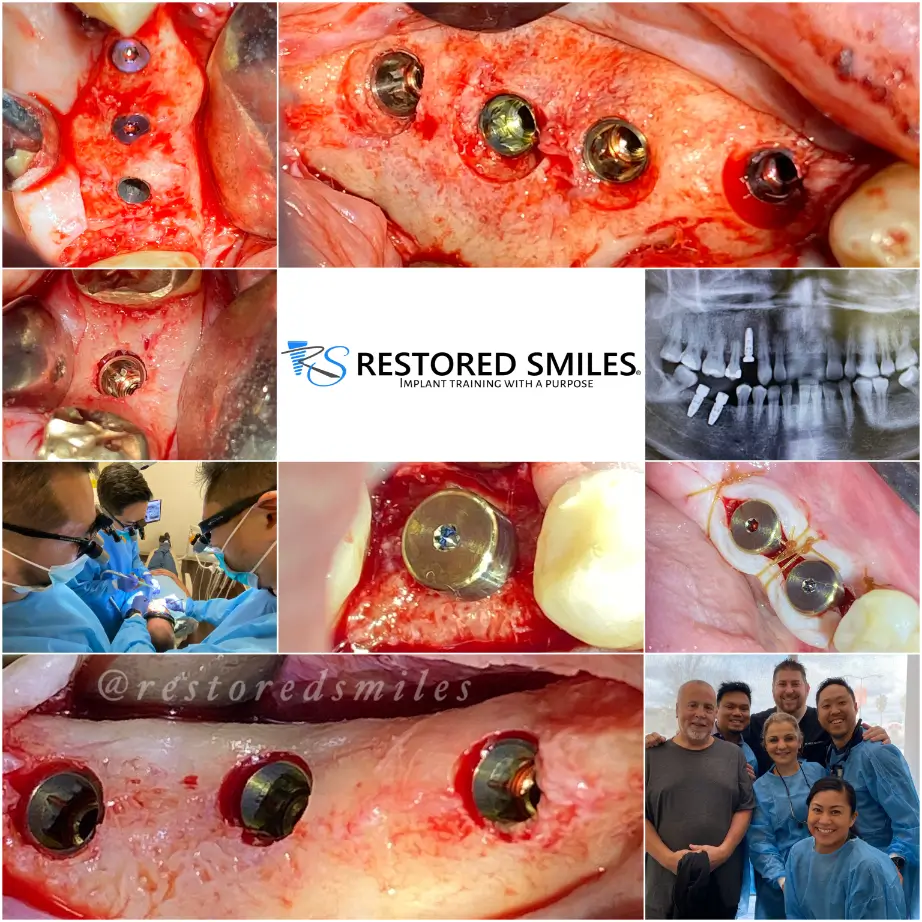
Doctors spend two full days performing supervised procedures on live patients.
Restored Smiles states that participants may have opportunities to place approximately 8–18 implants, depending on patient availability, procedures and the participant’s experience.
The number isn’t guaranteed.
And honestly, it shouldn’t be.
The point isn’t to chase a number.
The point is to create meaningful clinical repetitions with experienced guidance nearby.
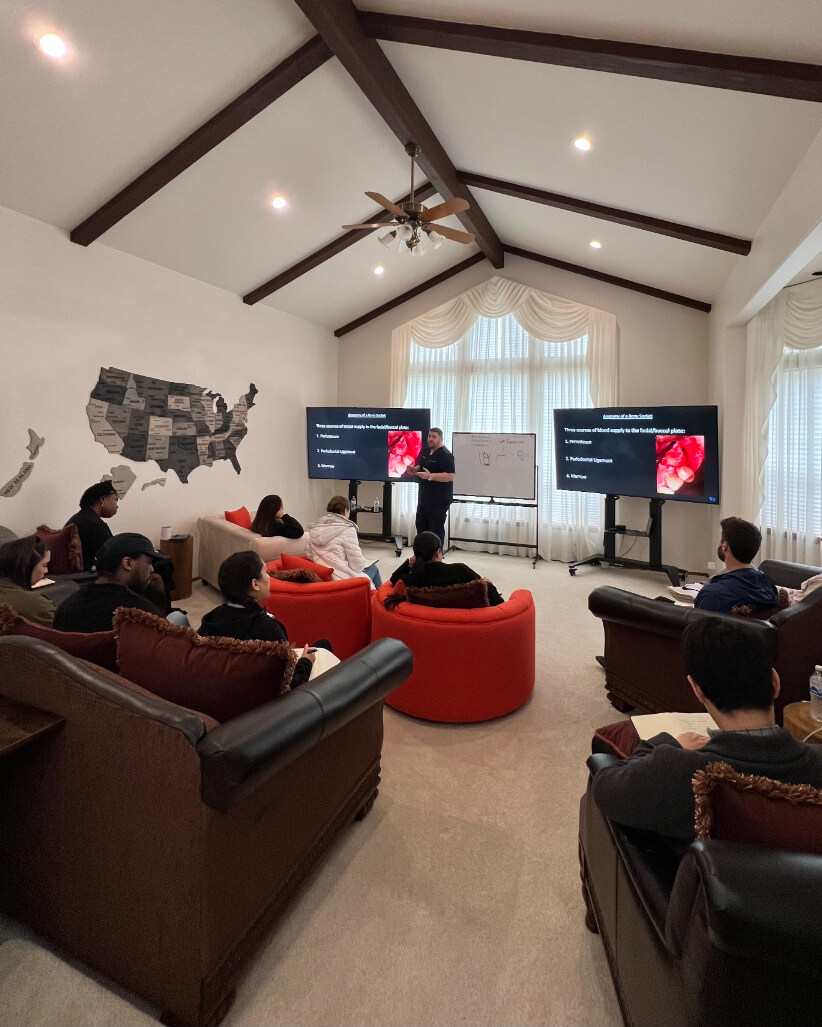
“Small class size” can sound like marketing language.
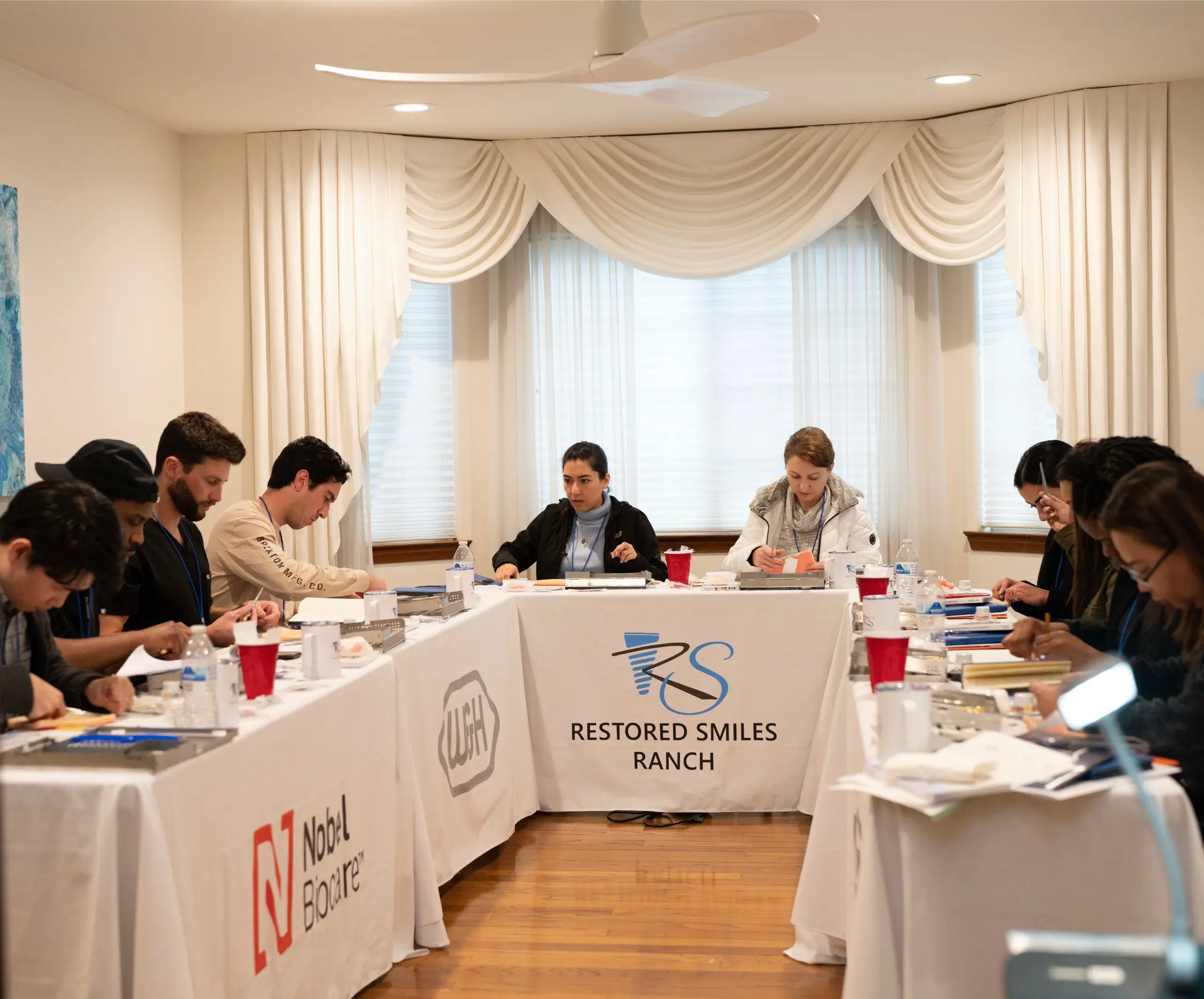
In surgery, it has practical consequences. Six doctors means fewer people competing for:
instructor attention, surgical opportunities, case discussion, feedback, and answers.
When you’re learning a procedure that involves millimeters, anatomy and irreversible clinical decisions, access matters. A large lecture hall can teach principles. A small surgical group can answer:
“What should I do right now?”
That’s different.
But What Happens After You Fly Home?
This may be the most important part.
Because even live-patient experience does not eliminate every future question.
You may return to your practice and encounter a case that looks slightly different from the ones you treated during the course.
That’s normal.
The question becomes:
Who can you ask?
Restored Smiles emphasizes ongoing access and mentorship rather than treating graduation as the end of the relationship.
For a dentist implementing implant dentistry for the first time, that can be enormously reassuring.
Because the hardest case isn’t necessarily the one you perform during training.
It may be the first one you choose entirely on your own.
The Goal Is Not to Stop Referring
This is important. Specialists exist for a reason. Complex anatomy. Advanced grafting. High-risk patients. Complicated esthetic cases. Significant medical considerations. Difficult full-arch situations. There will always be cases a GP should refer.
The goal of implant education should not be:
“Never refer another implant.”
The better goal is:
“Know which cases you can treat confidently—and know which ones you should refer.”
That’s a much more responsible standard.
And it may allow a general dentist to retain straightforward cases while continuing to collaborate with specialists where appropriate.
So Why Are You Still Referring Every Case?
Maybe the answer is simple. Maybe you need more education. But perhaps you’ve already taken plenty of education. Maybe what you’re missing isn’t another lecture.
Maybe it’s:
repetition. supervision. real patients. feedback. mentorship.
And the opportunity to turn knowledge into experience.
Because the biggest leap in implant education isn’t necessarily:
from beginner to expert.
It’s often:
From “I understand this” to “I’m ready to carefully begin.”
What Should Be Different Six Months After Your Implant CE?
Before registering for another course, ask yourself:
Will I have treated a live patient?
Will I have received direct feedback?
Will I better understand my case-selection boundaries?
Will I have someone I can contact when I’m unsure?
Will I feel more prepared to begin treating appropriate cases?
If the answer is yes, the course may actually change your practice.
If the answer is:
“I’ll have more notes…”
you may want to keep looking.
Learn It. Practice It. Perform It.
That’s the philosophy behind Restored Smiles.
Not instant mastery.
Not a promise that every dentist should perform every case.
A progression.
Education.
Hands-on experience.
Supervised live surgery.
Mentorship.
And the opportunity to return home with more than a certificate.
“ The greatest course I have attended so far. I lost track of how many implants I placed after my second surgical session. The amount of info and surgical skills I received from Dr. Huss was amazing. He shared all his knowledge with us and had us assist each other as we performed extractions, bone grafting, ridge augmentations, and sinus lifts. I would highly recommend this course for anyone interested in placing and restoring implants! ”
“Amazing course and even more phenomenal mentorship from Dr. Huss! I will be forever grateful for all that you have taught us and continued to do so even with the class finished. You continue to inspire us and motivate us! Thanks for all you do Dr. Huss! ”
“ Whether you’re looking to advance your surgical skills or seeking to start your implant career, Dr. Huss provides an array of coursework tailored to your needs."
“ This course was a game changer for my career. I only started this course because it was offered in my area with little expectations. However, I gained a tremendous amount of surgical training not limited to implant placement. I feel so much more confident about dental surgeries. My patients have been so much happier with GP implant options and same day implant placements. If you are looking for great implant courses, this is it! I highly, highly recommend it. Thank you, Dr. Huss!!”
“ I never thought I would be able to confidently place implants this early on into my career. Prior to taking his class, I still had reservations with surgical extractions and socket preservation. After his class, my surgical skills and confidence has increased tremendously. Dr. Huss taught me the fundamentals behind implant placement and wholeheartedly supported me to take on more challenging cases. His passion for his craft is contagious and I would recommend anybody and everybody who is interested in learning about implants at any level to join his class.”
“Dr. Huss is without a doubt one of the nicest and genuine people you will ever meet. He has a true passion for the field of implantology and cares so much for his students. Pathway to Predictable and Successful Implant Placement, by Restored Smiles, is the best course I have taken in a long time. I had minimal surgical experience before this course. Now I feel confident handling all surgical extractions, placing bone graft with the membrane, and predictable implant placement. Dr. Huss is truly one of a kind, I wish we had instructors like him in Dental School.”
"I’ve taken a CGF course before, however I didn’t feel comfortable utilizing it in my office. After taking this course, I feel confident and excited to start implementing CGF! Dr. Huss made the class practical and easy to understand."
"Dr Huss is awesome, great teacher, open and kind and friendly and he empowers you to learn. Facilities were great and the info was simplified rather than showing a bunch of complex Molecular Biology that doesn’t apply clinically."
"Fantastic course. It focuses on the real important facts in terms of case selection and atraumatic extractions. Dr. Huss is great and delivers the content with knowledge and keeps it interesting. The hands on suturing part is fun as well..."
"Great course. Dr Huss distills the information down to easily understandable and practical fundamentals. Very useful."
"Dr. Huss continues to show his passion of implant dentistry through his teachings. That has been contagious in my continuous pursuit of learning more through his course and beyond. Dr. Huss is knowledgeable, engaging, and cares about your learning. Highly recommended to anyone considering implant dentistry in any form."
"The CGF course was excellent! Dr. Huss explained the information so thoroughly that it was easy to implement right away! He is very knowledgable about the field of implantology and it shows. He is an amazing mentor who is approachable, down to earth and wants to help you be the best provider for your patients. I highly recommend this course for anyone who wants to incorporate a relatively simple yet highly effective procedure into their practice."
"I did most of my implant training with Dr.Huss. He is very passionate about teaching, shares all the knowledge he has, and the best thing ever is he is just a text or a call away to provide you with support when you work on your own. Last course I took was the CGF and bone grafting which was phenomenal."
"Dr Huss is a knowledgeable instructor. I have taken his CGF and live implant surgery classes. His classes are practical and help to build my confidence in the field of implant dentistry. I Highly recommend his classes."
"An amazing course that gives you a very thorough understanding of Ridge preservation and augmentation. Dr Huss is an amazing teacher and his experience and courses have helped me tremendously in gaining more confidence in doing more complex cases. He is quite approachable. Material is clearly directed towards anyone who wishes to successfully incorporate implants in their daily practice and with this course you can take it to a next level."
"A must take class for all who are passionate about dental implants and bone preservation/ augmentation. Dr Huss is an amazing instructor and gives great pointers on how to easily incorporate this technique into your dental practice. I have not only learnt a lot from him, but his mentoring has greatly improved my implant success rate. Thank you Dr Huss for always being available over the phone when I am stuck with a case. You are best!!"
"I’ve taken many implant and bone grafting courses over the years and still haven’t felt comfortable doing these procedures on my own until now. Dr. Huss’ course provides a learning environment that sets you up for success even in the toughest situations. I now feel confident in my case selection and execution and I know that if by chance I do get stuck he’s only a phone call away. Thank you Dr. Huss for being for so down to earth and approachable. I can’t say enough how much I appreciate everything you’ve taught me."