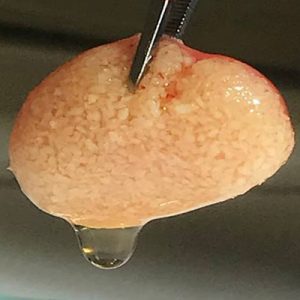
In the ever-evolving world of implant dentistry, Platelet-Rich Fibrin (PRF) is revolutionizing the way we approach bone grafting and tissue regeneration. At Restored Smiles, we integrate PRF into both our Ridge Augmentation and Hands-on CGF/PRF courses to teach dentists not only how it works—but how to use it successfully in their daily practice.
PRF is a natural, autologous biomaterial derived from the patient’s own blood. It’s made by centrifuging a small blood sample without any additives, forming a fibrin matrix rich in:
These components enhance tissue regeneration, angiogenesis, and wound healing—making PRF a game-changer in grafting procedures.
So how exactly does PRF improve grafting results? Here’s what our hands-on training shows you:
By mixing PRF with particulate bone grafts (allograft or xenograft), you create “Sticky Bone”—a moldable, stable material that stays in place during healing.
The slow release of growth factors from PRF over 7–14 days leads to faster tissue maturation and stronger vascularization around the graft.
PRF membranes (compressed fibrin clots) can be used instead of synthetic membranes to protect graft sites and support primary closure.
Because PRF is autologous, it triggers less inflammation, improving comfort and reducing the need for extensive meds post-surgery.
During our courses, you’ll learn how PRF can be integrated into:
✅ Ridge augmentation and preservation
✅ Socket grafting post-extraction
✅ Sinus lifts
✅ Soft tissue healing
✅ Periodontal regeneration
✅ Minor GBR procedures
You’ll also learn venipuncture techniques with real-time supervision—so you’re confident in drawing and handling blood safely.
A recent attendee used PRF in a challenging buccal defect. The result? Faster soft tissue healing, less swelling, and a solid graft foundation for future implant placement.
Before & after images shown during the course—plus take-home protocols for implementation.
PRF isn’t just a trend—it’s a biological advantage. Whether you’re a beginner or an advanced clinician, learning how to incorporate PRF:
At Restored Smiles, we don’t just talk about PRF—we let you work with it directly so you leave with usable, real-world skills.
Our instructors have used PRF in hundreds of surgeries—from socket grafts to advanced ridge reconstruction. Their case knowledge and clinical pearls will help you avoid mistakes and maximize success from Day 1.
You’ll get hands-on exposure to PRF protocols at our state-of-the-art facility in Lompoc, CA. From venipuncture to membrane formation—you’ll practice it all in a small-group setting.
Want to master PRF and bone grafting step-by-step? Here’s your roadmap:
PRF is one of the most important tools for modern implant dentistry—and it’s surprisingly simple once you learn the technique. At Restored Smiles, we teach you how to extract, process, and apply PRF with confidence, so your grafting results are consistently successful.